Oyo State is one of Nigeria’s most historically significant and economically influential states. Located in the South-West region of the country, it is widely regarded as the birthplace of one of Africa’s greatest empires—the Old Oyo Empire. From its rich Yoruba heritage to its vibrant commercial capital of Ibadan, Oyo State has played a major role in shaping Nigeria’s political, educational, cultural, and economic development.
Known as the “Pace Setter State,” Oyo has produced presidents, governors, Nobel Prize winners, business leaders, athletes, musicians, actors, scholars, and entrepreneurs whose influence extends beyond Nigeria.
With its fertile agricultural land, historical monuments, educational institutions, and thriving economy, Oyo State remains one of the country’s most important destinations for tourism, investment, and cultural exploration.
This article explores the complete history of Oyo State, its major towns and cities, culture, economy, tourist attractions, and notable personalities.
The Origin of Oyo State
The history of Oyo State dates back several centuries before colonial rule. It was the home of the mighty Oyo Empire, one of the largest and most powerful empires in West Africa between the 15th and 18th centuries.
The empire was founded by Oranmiyan, a legendary Yoruba prince believed to be the grandson of Oduduwa, the progenitor of the Yoruba people. Under successive Alaafins (kings), Oyo expanded its territory through military strength, diplomacy, and commerce.
At its peak, the empire controlled territories that now form parts of Nigeria, Benin, and Togo. Oyo became famous for its well-organized government, cavalry army, taxation system, and flourishing trade.
Following the decline of the Oyo Empire in the early nineteenth century due to internal conflicts and external invasions, new settlements such as Ibadan rose to prominence.
During British colonial administration, the region became part of the Western Region of Nigeria.
Oyo State was officially created on 3 February 1976 from the former Western State during the military administration of General Murtala Mohammed.
Ibadan was chosen as the capital because of its size, strategic location, and economic importance.
Geography and Location
Oyo State shares boundaries with:
- Ogun State
- Osun State
- Kwara State
- Benin Republic
The state occupies approximately 28,454 square kilometres, making it one of the largest states in southern Nigeria.
Its climate supports farming throughout the year, while rivers such as the Ogun River and Ofiki River contribute to agriculture and water supply.
Ibadan – The Capital City
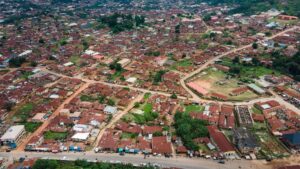
Ibadan is the capital and largest city in Oyo State. It is one of Africa’s largest indigenous cities by land area and has long served as a center of administration, education, commerce, and culture.
Originally established in the 1820s as a military settlement, Ibadan quickly developed into a thriving commercial city due to its strategic location.
Some of the city’s famous landmarks include:
- Cocoa House
- University of Ibadan
- Agodi Gardens
- Bower’s Tower
- Mapo Hall
- National Museum of Unity
Ibadan is also home to major industries, publishing companies, hospitals, research institutes, and financial institutions.
Oyo Town – The Seat of the Alaafin
Oyo Town is one of the most historically significant towns in Nigeria.
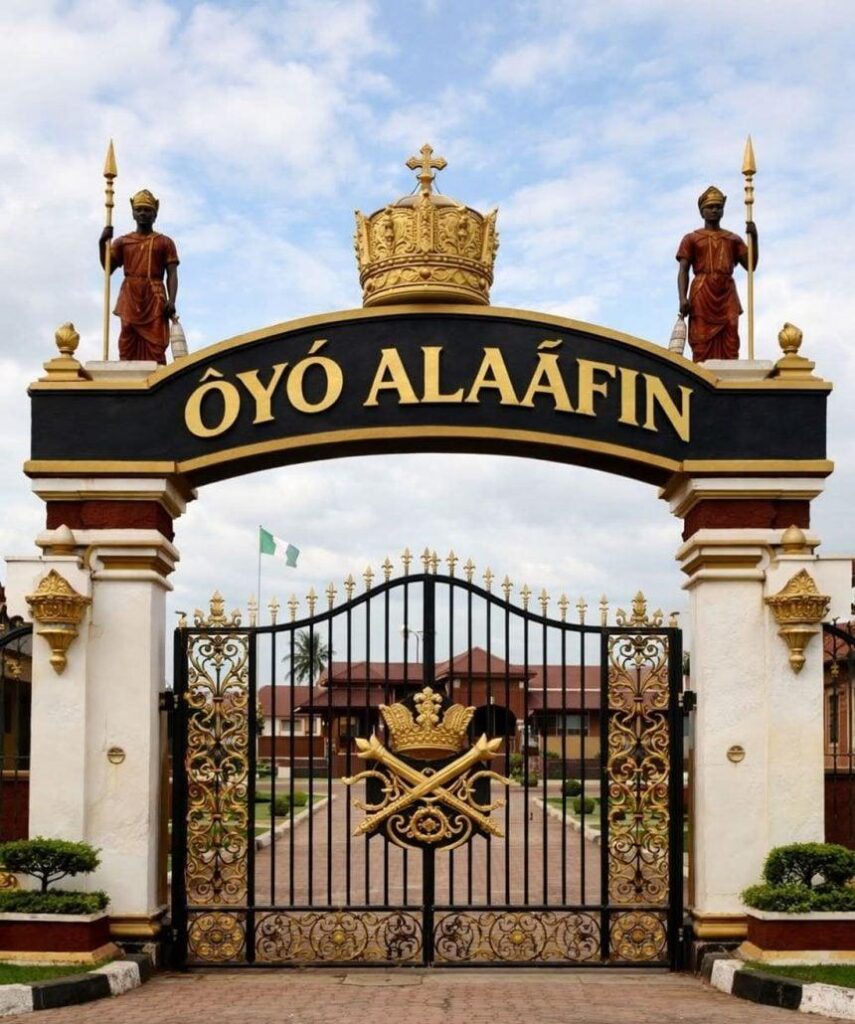
It served as the capital of the ancient Oyo Empire and remains the traditional headquarters of the Alaafin of Oyo.
The town attracts visitors interested in Yoruba history, traditional festivals, and royal heritage.
The annual Oranyan Festival celebrates the legacy of Oranmiyan, one of the founders of the Yoruba kingdoms.
Ogbomoso
Ogbomoso is the second-largest city in Oyo State.
It is known for:
- Agriculture
- Commerce
- Education
- Christianity
The city hosts Ladoke Akintola University of Technology (LAUTECH), one of Nigeria’s leading universities.
Ogbomoso is also famous for its large markets and thriving small businesses.
Saki
Saki is an important agricultural town located in northern Oyo State.
Farmers in Saki produce:
- Maize
- Yam
- Cassava
- Beans
- Groundnuts
- Cotton
Because of its proximity to the Benin Republic, Saki also serves as an important trading center.
Iseyin
Iseyin is popularly known as the home of Aso-Oke weaving.
For centuries, skilled artisans in Iseyin have produced handwoven fabrics used for weddings, festivals, and traditional ceremonies.
The town is also one of Nigeria’s major producers of tobacco and agricultural products.
Other Major Towns in Oyo State
Oyo State consists of many historic towns, including:
- Awe
- Eruwa
- Igboho
- Fiditi
- Kisi
- Okeho
- Moniya
- Lanlate
- Oyo
- Irepo
- Igbeti
- Tede
- Igbo-Ora
- Ago-Are
- Sepeteri
- Otu
- Jobele
- Omi Adio
- Akinyele
- Akanran
Each town contributes to the state’s cultural diversity and economic development.
Culture and Traditions
Oyo State is deeply rooted in Yoruba culture.
Its traditions include:
- Respect for elders
- Traditional chieftaincy institutions
- Family values
- Rich oral history
- Colorful festivals
Traditional rulers remain highly respected across the state.
Major festivals include:
Sango Festival
Held annually to celebrate Sango, the legendary Alaafin of Oyo who later became the Yoruba god of thunder.
Oranyan Festival
Celebrated in Oyo Town in honor of Oranmiyan.
Egungun Festival
A colorful cultural event where masquerades perform traditional dances.
Gelede Festival
Celebrating womanhood, fertility, and community harmony.
Education
Oyo State has earned a reputation as one of Nigeria’s leading educational centers.
Major institutions include:
- University of Ibadan
- Ladoke Akintola University of Technology
- The Polytechnic, Ibadan
- Federal School of Surveying
- Emmanuel Alayande University of Education
- Lead City University
- Dominican University
Thousands of students from across Nigeria study in these institutions every year.
Economy
The economy of Oyo State is driven by:
Agriculture
Farmers cultivate:
- Cocoa
- Cassava
- Maize
- Yam
- Rice
- Plantain
- Vegetables
Manufacturing
The state has industries involved in:
- Food processing
- Textiles
- Beverages
- Printing
- Pharmaceuticals
Commerce
Ibadan hosts some of Nigeria’s largest markets including:
- Bodija Market
- Dugbe Market
- Gbagi Market
These markets attract traders from across West Africa.
Tourism
Oyo State boasts numerous tourist attractions.
Agodi Gardens
A beautiful recreational park featuring lakes, gardens, picnic spots, and children’s play areas.
Cocoa House
The first skyscraper built in tropical Africa and a symbol of the region’s cocoa wealth.
Bower’s Tower
A historic observation tower offering panoramic views of Ibadan.
University of Ibadan Zoological Garden
Home to various species of wildlife and popular with families and students.
Ado-Awaye Suspended Lake
One of the few naturally suspended lakes in the world, located on Oke-Ado Hill.
Alaafin’s Palace
A major cultural and historical landmark in Oyo Town.
Famous Celebrities and Notable Personalities from Oyo State
Oyo State has produced many influential Nigerians across politics, literature, entertainment, sports, and business.
Wole Soyinka
Africa’s first Nobel Prize in Literature winner and one of the world’s most respected playwrights and intellectuals.
Chief Obafemi Awolowo
A nationalist, statesman, and one of Nigeria’s founding political leaders whose reforms transformed education and governance in Western Nigeria.
Chief Bola Ige
Former Governor of old Oyo State and former Attorney General of Nigeria.
Lamidi Adedibu
A prominent political figure widely known as the “Strongman of Ibadan Politics.”
Adebayo Alao-Akala
Former Governor of Oyo State remembered for his contributions to infrastructure and rural development.
K1 De Ultimate (King Wasiu Ayinde Marshal)
One of Nigeria’s most celebrated Fuji musicians with a career spanning several decades.
Yinka Ayefele
Popular gospel singer, broadcaster, and founder of Fresh FM.
Seyi Makinde
Engineer, businessman, and Governor of Oyo State.
Femi Adebayo
Award-winning Nollywood actor, producer, and lawyer.
Adebayo Salami (Oga Bello)
Veteran Yoruba actor and filmmaker.
Muyiwa Ademola
Popular Nollywood actor and producer.
Toyin Abraham
Award-winning actress with strong family roots in Oyo State.
Lateef Adedimeji
Acclaimed Nollywood actor recognized for his versatility.
Kola Daisi
Business executive and entrepreneur.
Rashidi Yekini
Although associated with Kwara by birth, he spent part of his football career in Oyo State and remains celebrated throughout the South-West.
Local Government Areas
Oyo State has 33 Local Government Areas, including:
- Afijio
- Akinyele
- Atiba
- Atisbo
- Egbeda
- Ibadan North
- Ibadan North-East
- Ibadan North-West
- Ibadan South-East
- Ibadan South-West
- Ibarapa Central
- Ibarapa East
- Ibarapa North
- Ido
- Irepo
- Iseyin
- Itesiwaju
- Iwajowa
- Kajola
- Lagelu
- Ogbomoso North
- Ogbomoso South
- Ogo Oluwa
- Olorunsogo
- Oluyole
- Ona Ara
- Orelope
- Oriire
- Oyo East
- Oyo West
- Saki East
- Saki West
- Surulere
Why Oyo State Is Called the Pace Setter State
Oyo State earned the nickname “Pace Setter State” because it has consistently led Nigeria in education, commerce, infrastructure, media, agriculture, and public administration. The establishment of the University of Ibadan, Cocoa House, and several pioneering institutions reinforced its reputation as a leader in national development.
Conclusion
Oyo State stands as one of Nigeria’s greatest cultural and historical treasures. From the legendary Oyo Empire and the royal traditions of Oyo Town to the bustling metropolis of Ibadan and the commercial energy of Ogbomoso, the state has played a central role in shaping the history of the Yoruba people and modern Nigeria.
Its remarkable blend of history, education, culture, agriculture, tourism, and economic opportunities continues to attract visitors, investors, students, and researchers from around the world. Whether exploring the ancient palace of the Alaafin, admiring the heights of Cocoa House, or relaxing at Agodi Gardens, visitors quickly discover why Oyo State remains one of Nigeria’s most fascinating destinations and truly deserves its title as the Pace Setter State.